← Back

TL;DR

Challenge

Solutions

Research

Research Methods

Process

Key Insights

Reflection

SERVICE DESIGN

LAUNCHED 2025

Birding by Ears

MY ROLE

UX Researcher

TIMELINE

September - December 2025

CLIENT

Bird Connect Seattle

SKILLS

Service Design

Product Design

User Research

TL;DR

Overview

This research project explored the intersection of Birding as a pastime activity and inclusivity, specifically focusing on how birding, a common activity in the Pacific Northwest, can be experienced through different senses. Rather than viewing visual impairment through a lens of limitation, our goal focused on elevating ways of experiencing nature through sounds, memory and awareness.

CHALLENGE

Birders with visual impairments are often excluded from shared birding experiences and face challenges participating in the same ways as sighted birders.

Birders with visual impairments are often excluded from shared birding experiences and face challenges participating in the same ways as sighted birders.

How might we evolve birding culture so that the experiences of birders with visual impairments enrich the community as a shared source of learning, inspiration, and belonging?

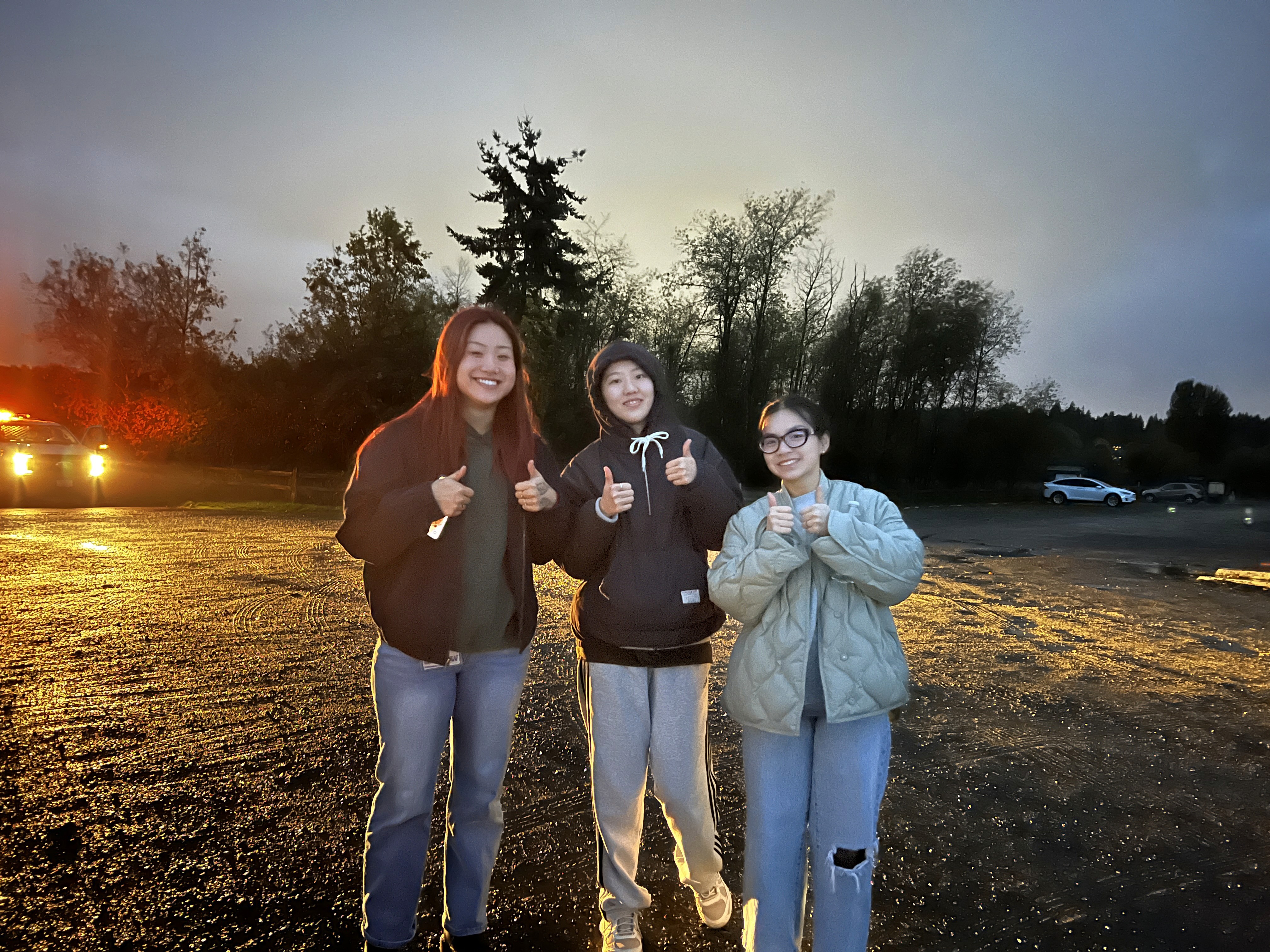
First time birding with Bird Connect Seattle

The view of a Cooper Hawk through my binocular

SOLUTIONS

Three pillars for a more inclusive birding experience

Awareness

How can we make people aware that not every birder has the same goal?


Raising awareness through both physical signs and digital channels, it can create more understanding and openness to different birding practice.

Guidance

How can we build confidence for sighted birders to offer assistance to birders with visual impairments?


Provide clear guidance to bridge the gap between birders and birders with visual impairment. Helping birders understand expectation, offer meaningful conversation and build genuine confident connection.

Reminiscene

How might we show the perspective of birders with visual impairments?


By compelling audio highlights of bird songs, our solution builds on Merlin’s existing workflow to highlight a birding by ear perspective, and the learning and beauty that come will fully focusing on sounds.

RESEARCH

Research Questions

Five questions guided the generative phase of my research:

  1. What are the main motivations for birding?

  2. What are the emotional benefits of birding?

  3. What is the birding experience for people with visual impairments?

  4. What barriers and opportunities exist within birding?

  5. What additional perspectives can birders with visual impairments provide?

Birders with visual impairments are often excluded from shared birding experiences and face challenges participating in the same ways as sighted birders.

Birders with visual impairment bring a unique and inspiring way of experiencing through sound, memory and awareness. By learning from their experiences, we’re not only making birding more accessible, but also helping others appreciate more meaningful ways of connecting with the world around them.

"So much emotion in the crowd song (sadness, elation, cheering … ). Birding really enhances my life, a huge impact on my life." - Jay, a birder with visual impairment

RESEARCH METHODS

Learning from the field, the experts, and the community

I designed a four-phase research arc: desk research to build foundational knowledge, generative field research to learn from the community firsthand, co-design to develop solutions with (not for) our participants, and evaluative testing to validate our concepts.

DESK RESEARCH

Before entering the field, I conducted a literature review covering birding, accessibility barriers, existing adaptations used (camera zoom, audio-based identification) and the emotional and social dimension of birding as a practice.


I also benchmarked existing birding platforms, attended Birdability panels featuring birders with visual impairments and analyzed the Merlin Bird ID app experience.

Attending panel during Birdability Week 2025 for generative research

KEY FINDINGS

For people who are blind or have low vision, birding is typically sound-centered. Birdsong acts as a form of spatial awareness and meaning-making. Despite this, visually impaired birders face barriers including limited physical access, social exclusion, information gaps, and noise pollution. Their experiences offer unique insights into listening, presence, and multi-sensory engagement.

FIELD OBSERVATION

I didn't know what is birding… so I went birding!


I participated in a two-hour field research session guided by Birds Connect Seattle to gain firsthand experience with birding and develop foundational knowledge by engaging with people deeply involved in the practice.


📍Bellevue, WA

My team and I first time birding with Bird Connect Seattle

SUBJECT MATTER EXPERTS INTERVIEW

Eight in-depth interviews with experienced birders explored practices, motivations, and tools. Three participants were birders with visual impairments who provided essential insights into accessible birding experiences.

SME Meeting with a long-time birder

DATA ANALYSIS

Through coding and affinity mapping, I synthesized research data into key themes centered on exclusivity within the birding community, challenges in guidance and support, and learning through birding.

Codes and quotes board and affinity map showing thematic clusters

KEY INSIGHTS

What we discovered about birding across abilities

The research revealed a gap between how sighted birders perceive support and what birders with visual impairments actually need, alongside deep community warmth and a desire for change.

Misaligned Assistance

Sighted birders heavily rely on auditory cues themselves, but when birding alongside someone with a visual impairment, they instinctively default to sharing what they see. The impulse is generous but misaligned with what birders with visual impairments want. This creates an uncomfortable dynamic: sighted birders feel they're helping, while visually impaired birders feel they're being talked at rather than birded with.

Fear of Liability

A lack of understanding about the experiences and needs of birders with visual impairments often prevents sighted birders from offering any support at all. Many avoid interacting altogether, not out of indifference, but out of anxiety about saying or doing the wrong thing, or concerns about safety liability on trails. The result is unintended exclusion, driven by good intentions and no guidance.

Exclusion & Fragmentation

While the birding community is widely seen as warm and welcoming, it can still feel exclusionary and lacking in diversity. People with visual impairments particularly struggle to find compatible birding companions. There's no easy way to connect with others who share their interests and accessibility needs.

The Power of Community

Birding alongside people with visual impairments helps sighted birders develop a deeper appreciation for birds — and for each other. When sighted birders slow down and listen instead of scan, they discover dimensions of the experience they'd been missing. The community is already working toward inclusivity through programs like Birdathons and Birdability Panels, creating a foundation we could build on rather than replace.

CO-DESIGN SESSIONS

Why Co-Design?

I chose co-design as our evaluative approach because I was designing for a community, not just a user. Traditional usability testing assumes a product exists to be tested. My challenge was upstream of that; I needed to identify what should exist and ensure it felt relevant, meaningful, and implementable.


While the sessions included feedback on early design ideas, they primarily centered on participant input to ensure the concepts were shaped by the people most affected.

Co-Design session with Bird Connect Seattle at their office

How I ran Them

I facilitated two parallel workshops:


Workshop 1 - Birders with visual impairments: I opened with an icebreaker about recent birding experiences, then moved through three design areas: finding a birding community, reminiscence through audio highlights, and assisting birding organizations.


Workshop 2 - Bird Connect Seattle: Same structure, but focused on organizational feasibility, including what messages to put on trail signs, how to improve their website, and how to evolve their guide training.


Running these in parallel let us compare what the community needs with what the organization can realistically deliver and find the overlap.

Co-Design session with Bird Connect Seattle at their office

Co-Design session with Bird Connect Seattle at their office

REFLECTION

Birding is fun and it changed how I see the world

Birds are everywhere, but I had never really noticed them. Working on this project turned ordinary walking paths into something far more interesting, sparking a genuine curiosity and appreciation for both nature and the birding community.

Thinking beyond just a product

An app or digital platform alone doesn't solve a community problem. By listening closely to people's experiences and perspectives, I identified solutions that improve accessibility through service-focused approaches (training, signage, and organizational change) not just screens.

MADE WITH LOVE & MATCHA 🍵

Charlotte Truong

Product Designer

Charlotte Truong

Product Designer