Overview
The Experience
Technology Used
Reflection
Gallery
PHYSICAL PROTOTYPE | 2026
Reimagining Mini Golf Experience
Inspired by the anticipation and reward systems of Las Vegas games, we designed a multi-stage mini golf experience where each shot influenced a live slot machine outcome through sensors, motors, lighting, and real-time feedback.
MY ROLE
Product Designer
TIMELINE
January - March 2026
PROJECT
Physical Prototype
SKILLS
Interaction Design
Prototyping
Vibe Code
TL;DR
Traditional mini golf is familiar and predictable. We wanted to create a more dynamic experience by connecting physical gameplay with real-time visual, mechanical, and audio feedback.
The installation needed to feel intuitive without instructions, support continuous public play, and remain responsive and reliable within an 8×8-foot space and a limited budget.
THE EXPERIENCE
Three stages of interactive gameplay
Game 1: Plinko (Chance)
The Plinko board is a vertical peg board where the ball drops through obstacles and lands in a symbol slot at the bottom.
Game 2: Falling Cards (Precision)
Players land their ball behind their card of choice to match their first symbol.
Game 3: Lucky Roulette (Timing)
The Roulette game is a circular target where players aim to land the ball into segmented sections, including a center “instant win” zone
↓
Slot Machine
When players land their ball in the hole(s) of each game, the corresponding slot machine symbol will appear.
TECHNOLOGY USED
Hardware
Cardboards (… lots of CARDBOARDS)
Circuit Playground Express (CPX)
RGB LED Strip Lights and electrical wires
Solderless 3-Pin Connector
Sensors
Software
Makecode Adafruit
Circuit Python
P5.js
AI Support: Gemini, ChatGPT
REFLECTION
Failure is a part of the process
It was important to keep up the process of iteration - testing - debug. Things are unexpected and can fail every time. It is not always possible to test as a whole, but since we were constantly checking and testing in every step, it gave us a lot of time to identify the problem and find the right solutions.
Communication is key
As a team, it was essential to keep communicating with each other about our goals and process to make sure we are all on the same page.
This was my first experience designing and building an interactive physical system. Rather than avoiding the technical challenge, I took on one of the most ambitious projects in the class and quickly learned how to work with hardware, sensors, motors, programming, and system integration.
The experience pushed me far beyond my comfort zone, but successfully bringing the installation to life gave me confidence in my ability to learn unfamiliar tools and solve complex technical problems. It also strengthened my interest in designing experiences that bridge the physical and digital worlds.
Using AI in our design process
Considering the complicated nature of our project, we used AI - specifically Chat GPT Pro & Gemini Pro to help with “vibe coding”, debugging, and asking for advice when there are no instructions around.
GALLERY
Game Day
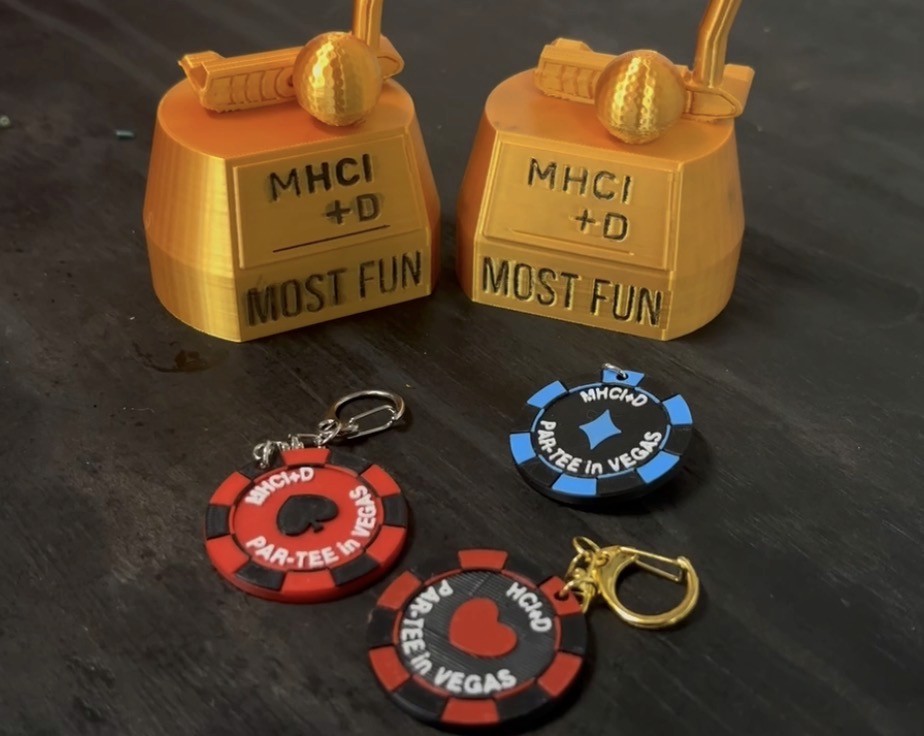
1st Place: Most Fun Award
Our Progess
CHARLOTTE TRUONG
WORK
PLAY
ABOUT
Resume
Charlotte Truong